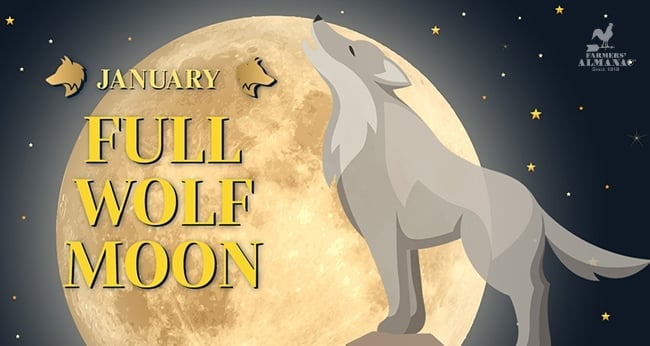
As the calendar turns to a new year, the cosmos often orchestrates a grand opening act, and 2026 is no exception. Stargazers worldwide are anticipating a truly remarkable celestial event: the January Full Moon affectionately known as the Wolf Moon. which arrives with an added layer of spectacle as it embraces "supermoon" status..
Breaking It Down
This isn't merely the first full Moon of the year; it's a vibrant display that promises to captivate. offering a luminous start to a year already brimming with lunar curiosities.. This annual phenomenon takes on enhanced significance in 2026 marking not only a moment for collective awe.
Obviously, also serving as a Celestial checkpoint for reflection forward-looking intentions.. From its ancient origins rooted in folklore to its contemporary astronomical allure. the Wolf Supermoon of January 2026 provides a potent blend of cultural richness scientific marvel inviting everyone to pause look skyward.
The Details
Overview and Introduction
Obviously, connect with the rhythms of our universe.. The first full moon of 2026, the venerable Wolf Moon, is set to grace our skies on Saturday, January 3rd . For those eager to catch its peak illumination, mark your calendars for 5:03 AM EST .
This precise moment signifies when the Moon is directly opposite the Sun in its orbit, appearing completely illuminated from Earth's perspective. Actually, however, the beauty of a full moon, especially a supermoon, extends beyond this singular instant. bright for several consecutive nights..
What This Means
Observers can begin their vigil on Friday evening, January 2nd , as the Moon rises majestically in the eastern sky shortly after sunset. It will remain a prominent fixture throughout the night reaching its highest point around midnight. before beginning its descent towards the western horizon by sunrise on Saturday January 3rd..
Key Points and Details
The spectacle continues into Saturday night and early Sunday morning, January 4th , offering ample opportunities for viewing, even for those who aren't early risers. This extended viewing window allows for various vantage points, from dramatic moonrises over cityscapes to tranquil glows in rural settings. For instance those on the West Coast will experience the peak illumination earlier in their local time around 2:03 AM PST.
Further Analysis
while Central Time observers will see it at 4:03 AM CST.. Basically, this means prime viewing experiences might shift slightly depending on your location relative to the Eastern Seaboard. Regardless of your specific time zone the overarching advice remains consistent: observing the moon when it's low on the horizon shortly after sunset before sunrise.
Obviously, often provides the most visually stunning dramatic perspectives due to the phenomenon of the "moon illusion " making it appear even larger more captivating.. crisp winter nights under a brilliant lunar glow.. This traditional designation for January's full moon is not arbitrary but deeply rooted in the seasonal experiences of ancient peoples.
Important Notes
Historical Background
whose traditional names for full moons often reflected natural occurrences behaviors observed during that particular time of year.. January historically a period of profound cold scarcity in the Northern Hemisphere was when packs of wolves were believed to be most vocal. their haunting howls echoing through snowy landscapes near villages..
While popular lore sometimes suggests wolves howl at the moon biologists confirm that their nocturnal vocalizations are primarily a means of communication – marking territory. locating pack members coordinating hunts – activities that would naturally become more noticeable distinct in the quiet frigid winter air.. European settlers later adopted many of these indigenous lunar names, integrating them into their own almanacs and cultural lexicon.
In Anglo-Saxon tradition, it was sometimes referred to as the "Moon After Yule," acknowledging its position following the winter solstice celebrations. Native American cultures also had alternative names such as the "Severe Moon" "Center Moon " reflecting the harsh conditions. Really, the feeling of being in the heart of winter..
Challenges and Issues
Spiritually, the Wolf Moon is often associated with themes of introspection, resilience, instinct, and a deep connection to one's community or "pack. " It encourages individuals to tap into their inner strength communicate their needs clearly prepare for the challenges opportunities of the year ahead. much like wolves navigating the winter landscape..
Clearly, This designation promises a visual treat, making our nearest celestial neighbor appear even more impressive. a point astronomers call "perigee.. " The Moon's orbit isn't a perfect circle; it fluctuates in distance from our planet throughout the month.
Actually, When a full moon happens near perigee, the Moon appears perceptibly larger and brighter than a typical full moon. Can you imagine that specifically the january 2026 wolf supermoon will appear up to 14% larger?. approximately 30% brighter than a "micromoon" – a full moon that occurs when the Moon is at its farthest point from Earth (apogee)..
Why it Matters
This significant difference in apparent size and luminosity is what makes supermoons such a captivating sight for casual observers and seasoned astronomers alike. While 14% larger might not sound astronomical on paper, when translated to the night sky, it creates a noticeably more dominant and brilliant presence. This effect is often amplified by the "moon illusion.
" an optical phenomenon where the Moon appears even more enormous when it's low on the horizon seen against terrestrial objects like trees buildings.. As moonlight filters through Earth's atmosphere at a shallow angle it can also imbue the Moon with a rich warm often yellowish orange hue. adding another layer of visual drama..
This combination of increased size, brightness, and atmospheric effects makes the Wolf Supermoon an unforgettable experience, particularly during moonrise or moonset. offering skywatchers a multi-faceted experience.. This cosmic alignment amplifies its significance and viewing potential.
Current Situation
known for its bright fast-moving "fireballs.. " This shower is active from late December into mid-January, with its peak typically occurring on January 3rd and 4th. While the bright supermoon's glow might make it challenging to spot fainter meteors the Quadrantids are renowned for their intense bursts.
Actually, sometimes producing over 100 meteors per hour under ideal dark conditions.. Skygazers who prioritize the meteor shower might seek out viewing locations where the bright moon is partially obscured try observing during the moon's setting. rising hours for a brief window of darker skies..
will also be a prominent companion to the Wolf Moon in the early January sky.. The bright "King of Planets" will appear relatively close to the full moon, adding another luminous point of interest for observers. This proximity offers a fantastic opportunity to see two major celestial bodies in close visual alignment, creating a beautiful tableau against the winter backdrop.
Future Outlook
Even without a telescope, Jupiter's steady, bright glow will be easily distinguishable from the twinkling stars, complementing the moon's brilliance. rather than the usual 12.. This occurs due to the Moon's synodic cycle (the time it takes to go from one new moon to the next, approximately 29.
5 days) not perfectly aligning with our Gregorian calendar months. Honestly, this extra full moon often referred to as a "Blue Moon" when it's the second full moon in a single calendar month. is slated for May 2026..
Moreover, 2026 promises other significant lunar events, including a total lunar eclipse in March and a partial lunar eclipse in August. The January Wolf Supermoon thus kicks off a truly exceptional year for astronomical observations, setting a high bar for the celestial events to follow. While the Moon is arguably the easiest celestial object to observe, optimizing your viewing conditions will enhance the experience significantly.
Concluding Remarks
is that it requires absolutely no special equipment for viewing.. Your naked eye is perfectly capable of taking in its enhanced size and brightness. However for those seeking a more detailed look a pair of binoculars can dramatically bring out the Moon's craters mare (dark plains) revealing textures.
shadows not visible with the unaided eye.. Even a small telescope will offer breathtaking close-ups, allowing you to explore the lunar landscape with remarkable clarity. Remember, the Moon will be incredibly bright, so filters might be useful for extended viewing through optics.
While a supermoon is bright enough to cut through some light pollution. seeking out a location away from city lights will always provide a more profound experience.. Honestly, rural areas, open fields, or even elevated vantage points can offer clearer, darker skies.
Concluding Remarks
Crucially, check your local weather forecast leading up to January 3rd. Clear skies are paramount for unobstructed viewing. If clouds are predicted for the peak illumination time don't despair; the Moon will appear full bright for the nights before after.
Can you imagine that increasing your chances of catching a glimpse during a break in the weather.?. Dress warmly for prolonged outdoor observation, as January nights can be exceptionally cold. Photographing a supermoon can be a rewarding challenge.
Actually, Its intense brightness often requires manual camera settings to avoid overexposure. For best results, use a tripod to maintain stability and a telephoto lens if you have one, to capture greater detail. Really, experiment with exposure times and apertures.
Concluding Remarks
Many photographers find that landscape shots with the large moon juxtaposed against a distant horizon architectural elements create stunning compositions especially during moonrise. moonset when the "moon illusion" is at its strongest atmospheric haze lends a warm golden glow.. Patience and practice are key to capturing this celestial marvel successfully.
These interpretations often connect the lunar phase to personal growth, emotional currents, and setting intentions for the year ahead. In 2026, the Full Wolf Moon occurs in the zodiac sign of Cancer. Astrologically, Cancer is a water sign, deeply associated with emotions, intuition, nurturing, home, and security.
A full moon in Cancer, especially a supermoon, is believed to amplify these themes, bringing emotional matters to a head. It often signals a period for introspection encouraging individuals to confront their deepest feelings release old patterns that no longer serve them. strengthen their emotional foundations..
Concluding Remarks
The opposition with the Sun in Capricorn during this period highlights a tension between our emotional needs our practical ambitions. prompting us to seek balance between inner security outward achievement.. The Wolf Moon's energy coupled with its supermoon status serves as a powerful call to embrace renewal.
inner strength at the very beginning of the year.. Obviously, historically, wolves symbolize instinct, communication, and community resilience. Spiritually, this lunation invites us to connect with our primal instincts, listen to our intuition, and find courage in the stillness of winter.
Really, it's an opportune time for setting clear intentions for 2026, focusing on what truly propels us forward and nourishes our spiritual well-being. This potent lunar moment encourages shedding outdated self-concepts, fostering genuine connections, and stepping onto new paths with confidence and clarity, grounded in our authentic selves. Looking ahead, the lunar calendar promises more intriguing displays, keeping our eyes turned skyward throughout 2026 and beyond.
Concluding Remarks
Intriguingly, the January Wolf Moon of 2026 is noteworthy for being the last supermoon until November 2026. This makes its early-year appearance particularly special, as stargazers will have to wait many months for another full moon of comparable size and brightness. The subsequent supermoons of 2026 are scheduled for November 24th December 23rd capping off the year with a return of these visually striking lunar events..
This rhythm of lunar proximity distance serves as a constant reminder of the dynamic dance between the Earth its natural satellite continually offering varied. beautiful perspectives.. Beyond the recurring supermoons, 2026 holds a roster of other significant lunar and celestial events.
Really, A total lunar eclipse is projected for March offering a dramatic "Blood Moon" spectacle as the Earth passes directly between the Sun Moon. casting a reddish hue on our satellite.. Following this a partial lunar eclipse will occur in August providing another opportunity to witness the subtle interplay of light shadow on the lunar surface..
Common Questions
Coupled with planetary conjunctions meteor showers the unique occurrence of 13 full moons. Honestly, 2026 is shaping up to be an exceptional year for astronomy enthusiasts casual skywatchers alike.. These events collectively reinforce our timeless connection to the cosmos, urging us to look up and appreciate the wonders unfolding above us.
The Wolf Moon of 2026 is more than just an astronomical date; it's a multi-layered event steeped in history. Honestly, rich with symbolism scientifically compelling.. Obviously, as a supermoon it offers a visually stunning start to the year appearing larger brighter than average.
a breathtaking sight for all who gaze upon it.. Actually, its traditional name linked to the evocative howls of winter wolves connects us to ancient rhythms cultural narratives while its astrological placement invites introspection. emotional release..
Concluding Remarks
Simply, Furthermore, its alignment with the Quadrantid meteor shower and the presence of Jupiter add extra dimensions to this early January spectacle. So as 2026 begins take a moment to step outside breathe in the crisp air. let the radiant glow of the Wolf Supermoon remind you of the profound beauty enduring mysteries that the universe continually offers..